

Holy Homework: What Would Jesus Do in Church?
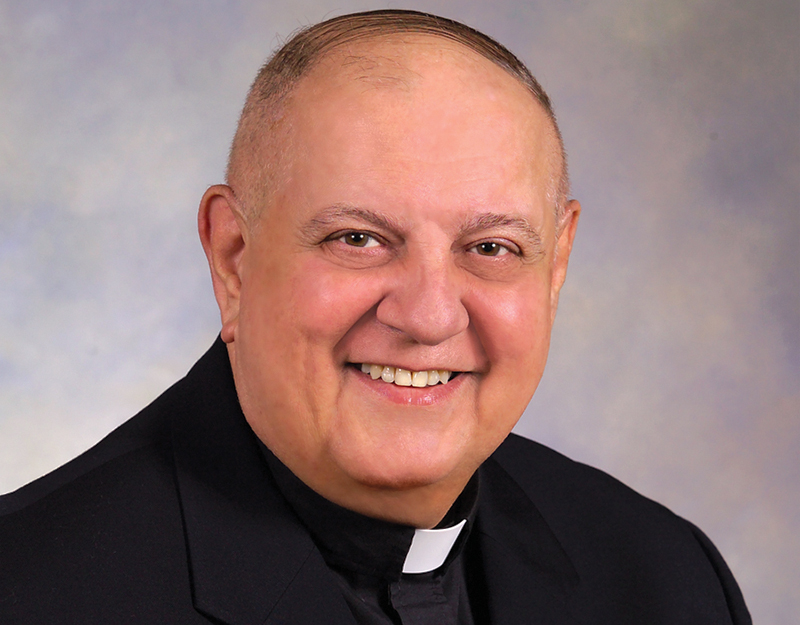
By: Father Bob Pagliari, C.SS.R., PH.D.
During these August days, let’s follow the example of Marta, who was faithful for 35 years. Let’s show up for Sunday Mass and practice those hidden gems that fasten our behavioral pins to our spiritual souls: WWJT, WWJS, WWJD.
After laboring arduously for 35 years, Marta decided to retire from the “Busy Bee Pinback Company” in Lakeview County. Her daily routine at work was neither physically strenuous nor intellectually challenging. More like a lock-step, assembly-line chore, she simply attached various clasps to the backsides of hundreds and hundreds of custom-ordered lapel badges. The only variety she experienced was choosing among the appropriate fasteners for the back of each. These ran the gamut from stick pins to safety pins, magnetized to rubberized, and cuff-linked to butterfly clutches.
The only attraction that added a rare occasion of spice to her job was the infrequent inspiring message on the front side of the pins. Of course, “Vote for N.” comprised the majority of the orders. But once in a while, some creative dispatches came along. For example, the standard “WWJD,” meaning “What Would Jesus Do?” was rarely but provocatively enhanced with the seriously thought-provoking “WWJT,” meaning “What Would Jesus Think?” or the more vocally confronting “WWJS,” meaning “What Would Jesus Say?”
Catholics often lament about the boringly repetitive dialogues they experience at “Mass.” Every week it’s the same.
Priest: “The Lord be with you.”
Congregation: “And with your Spirit.”
Why must the Mass be so repetitive? Don’t these monotonous exchanges foster passionless devotion—almost like “texting” with God from AI fill-ins rather than praising God from the heart? Constant repetition of the same lyrics is bound to render those words meaningless, right? Instead of being vibrant and quickening, isn’t there a danger that worship will become dry and lifeless if it’s done the same way every week? Shouldn’t the Spirit be moving us to pray in our own words rather than reading what others wrote from disposable missalettes?
As logical as these arguments appear to be, they miss the true meaning and purpose of organized liturgy. The Mass, besides being our most powerful prayer, is also a kind of template to be followed—a prayer guide for worship, if you will. Far from hindering us, good liturgy solidifies our connection with God by making that bond stronger. Our prayer life becomes firm, and our faith is deepened.
Here are five reasons why the Liturgy (the routine) of the Mass is essential to authentic Catholic worship.
1] Unification. Verbally responding with the same words that everyone else in Church is saying unites the faithful in prayer. If everyone chimed in with whatever words occurred to them, the result would be confusion, not cohesion.
2] Harmony. For much of history, the Latin phrase “bis orat qui cantat,” or “the one who sings prays twice,” has been attributed to St. Augustine. A congregation singing the same hymn together produces harmony, not cacophony.
3] Selflessness. Rather than focusing solely on our personal needs, liturgy leads to outpouring, not introspection. Of course, there is a time for private prayer. But communal worship is not that time.
4] Faith. The core of Catholicism is not belief in commandments (which are important), but rather belief in a person: Jesus Christ. Liturgy deepens that relationship, which in turn gives us the strength and determination to live those commandments we profess.
5] Heartfelt. Liturgy is a means, not an end. The goal of attending Mass each week is to give back to God the praise that is His due for all the good He has done for us. Gratitude for everything God has given us is confirmed by our showing up and participating every Sunday.
This weekly obligation reminds us that we are the creatures; we are not the Creator. We are made in God’s image. This includes our emotions, or as Augustine said, “Our hearts are made for Thee, O Lord, and they will not rest until they rest in Thee.”
Holy Homework: During these August days, let’s follow the example of Marta, who was faithful for 35 years. Let’s show up for Sunday Mass and practice those hidden gems that fasten our behavioral pins to our spiritual souls: WWJT, WWJS, WWJD.