



We spoke with Reverend Joseph Scolaro, S.T.D., about St. Joseph as a mentor, the role of philosophy in seminarians’ formation, and how that prepares future priests to engage in discussions of faith
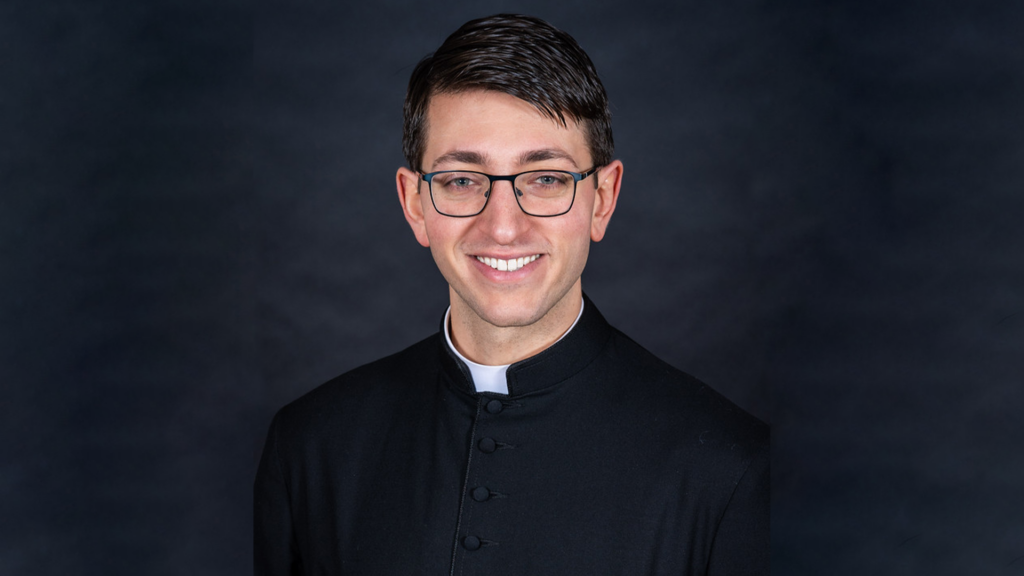
The Good Newsroom is celebrating St. Joseph’s Month by speaking with professors at St. Joseph’s Seminary, the major seminary for the Archdiocese of New York. St. Joseph served as the earthly father and teacher to Jesus during his youth and his apprenticeship in carpentry. He sets an example of work ethic that can still be followed today.
We spoke with Reverend Joseph Scolaro, S.T.D., about the role of philosophy in seminarians’ formation and how that prepares the minds of future priests for broader discussions of faith.
St. Joseph was a mentor to Jesus. How do you try to serve as a mentor to those who come to you in need of one?
Reverend Joseph Scolaro: St. Joseph is a beautiful model of mentorship, especially mentoring those preparing for priesthood. I often think of the job of priests in general as being much akin to carpentry, his craft. What does a carpenter do, but take the rough wood he has been given, and transform it into what it is meant to become? He does not create anything, but rather draws out from the wood its potential, giving it shape and form, sanding out the imperfections and polishing it.
A priest does this in his ministry, by the sacraments and by his example, drawing out the holiness God has in mind for each of those he serves. So too as a formator, we are meant to help form the seminarian into the holy priest God wants him to be, often by helping him sand out his weaknesses and become polished with virtues that will allow him to be a fitting instrument in the hand of God.
What are some questions you often receive at the beginning of a course?
One of the most common concerns of the seminarians is how each class will assist them in their ministry. It is encouraging to see that their primary concern is to prepare for the care of souls, so they want to understand how each discipline will serve that end. At times this can be challenging, as it is not always easy to connect more difficult concepts with pastoral work, however there is an appreciation that growing in a deeper knowledge of God in theology will always bear fruit, as it allows us to grow in a deeper relationship with Him which we can then go on to share with others.
READ: Monsignor Luke Sweeney, S.T.L., Professor of Catholic Social Teaching
Dogmatic teaching is closely related to philosophy, often with the theoretical nature of discussions. How do you engage students in this way of thinking?
The formation program is well structured in that the seminarians are all required to first study philosophy before continuing with their theological studies. This gives them a strong foundation to engage with concepts that are often deeply rooted in philosophical principles. In this way, they learn that theology is more than just blind acceptance of a list of dogmas, but a reasoned engagement with what has been revealed by God in a way that allows for deeper understanding.
Furthermore, growing in the ability to think philosophically allows them to evangelize and engage with those without faith who are seeking the truth. By beginning with fundamental aspects of human experience, seminarians can speak to others in a way that can invite them to faith. “
Are there any lines of questioning you begin with for students to open themselves up to looking at our faith in different ways and from different perspectives?
A valuable question to ask is: ‘How would you explain this to someone who does not believe?’ Seminarians are required then not only to examine what an aspect of our faith means but also to ask why it is reasonable and something worth believing in. By requiring them to put truths of our faith in new terms for someone unfamiliar with theology, they must think of creative approaches and use concepts shared with those outside the faith that opens potential for great fruit.