As the Archdiocese of New York prepares to install Archbishop-designate Ronald A. Hicks as the new Archbishop of New York on February 6, Saint Patrick’s Cathedral quietly offers its own catechesis on episcopal ministry.
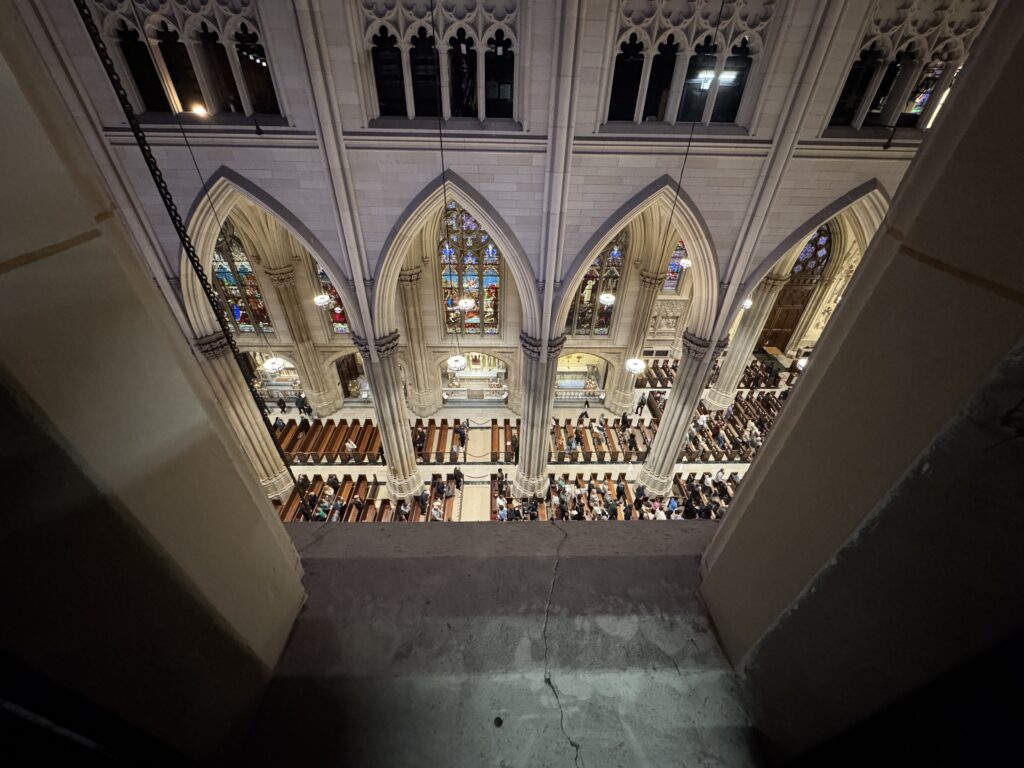
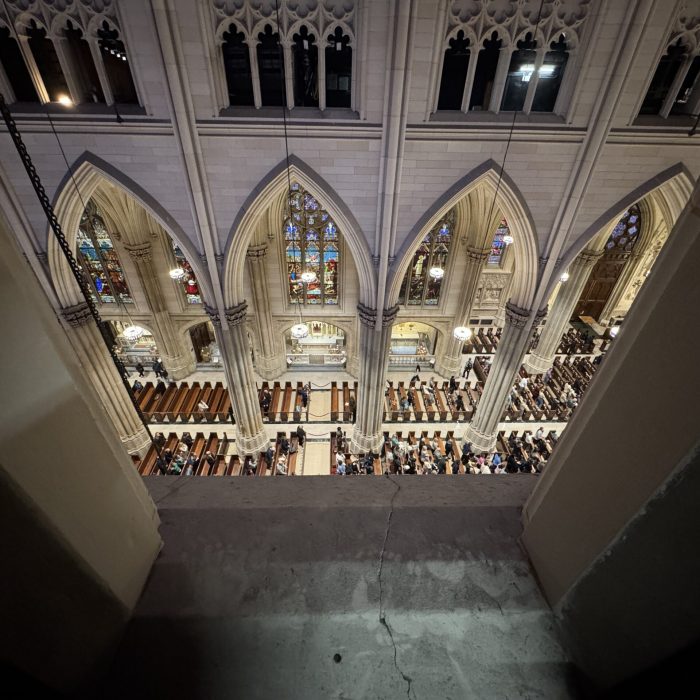
Long before a bishop speaks from the pulpit or presides at the altar, the cathedral itself teaches. Its architecture, memorials, and liturgical symbols tell the story of what it means to shepherd the local church.
These are not decorative details. They are visual theology. As one strolls through the cathedral, they reveal the responsibilities entrusted to an archbishop and, for a cardinal, the weight of service carried on behalf of the universal Church.
The cathedra: authority that serves
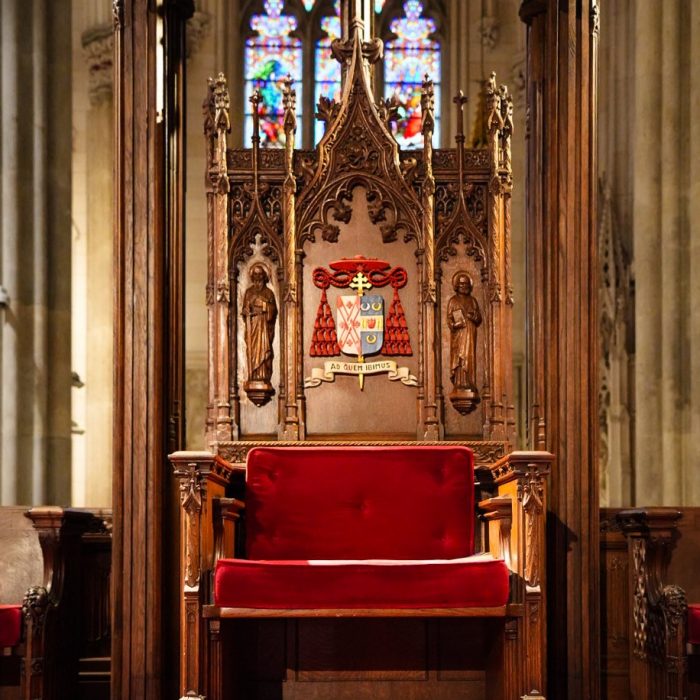
Near the high altar stands the cathedra, the bishop’s chair. It is the most literal symbol of episcopal authority. From it comes the word cathedral. It signifies the bishop’s teaching office (magisterium). This seat is not about prestige. It represents teaching, unity, and governance exercised in communion with the church. Every archbishop inherits not only the chair itself but the apostolic responsibility it signifies.
The cathedra reminds the faithful that leadership in the church is rooted in continuity. Whoever occupies it does so temporarily, in service to a mission that predates and outlasts any individual.
Coats of arms beneath our feet
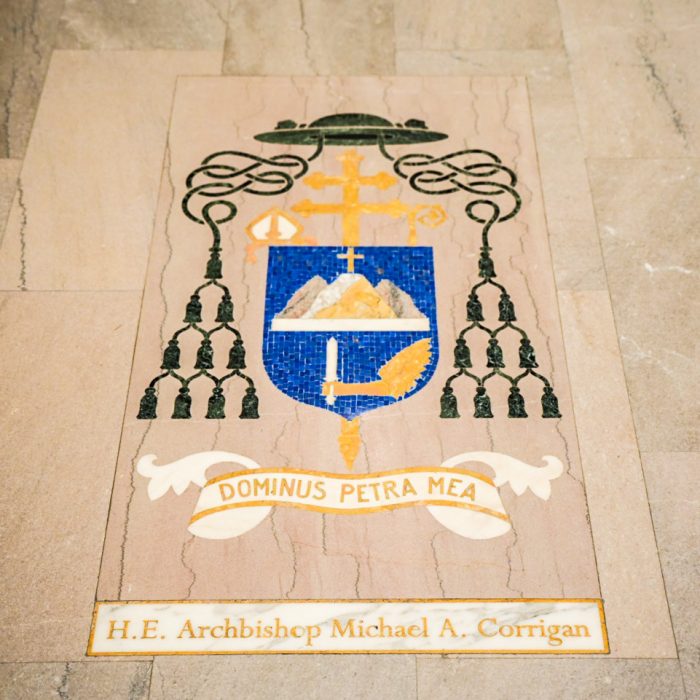
Embedded in the marble floors are the coats of arms of past archbishops and cardinals. They are easy to miss, placed not at eye level but underfoot. That placement is instructive.
The heraldry of John Cardinal O’Connor and Terence Cardinal Cooke reminds the faithful that a bishop’s identity is bound to his office and his people. Mottos such as Cardinal Cooke’s “Fiat voluntas tua” (“Thy will be done”) speak of obedience, sacrifice, and pastoral resolve.
These mosaics suggest that episcopal leadership is not meant to elevate a person above the faithful, but to be one who walks among them, as shepherds.
The galero: honor laid aside
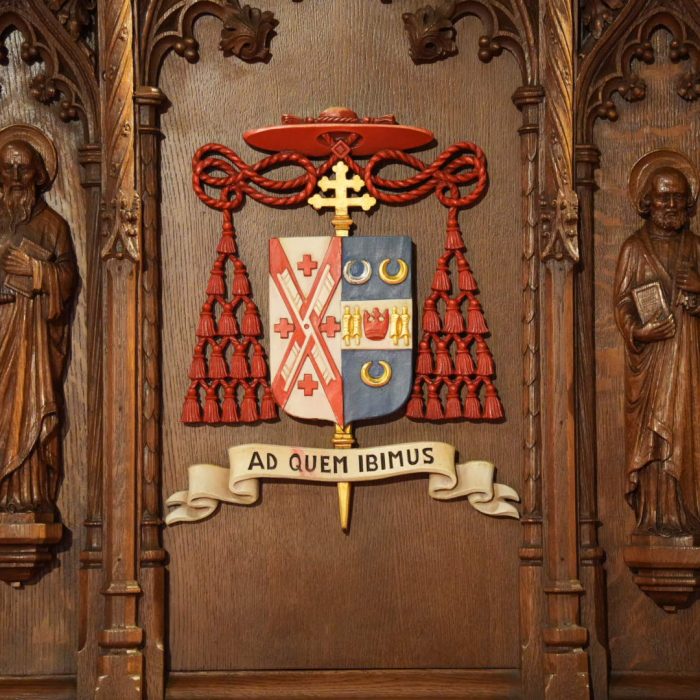
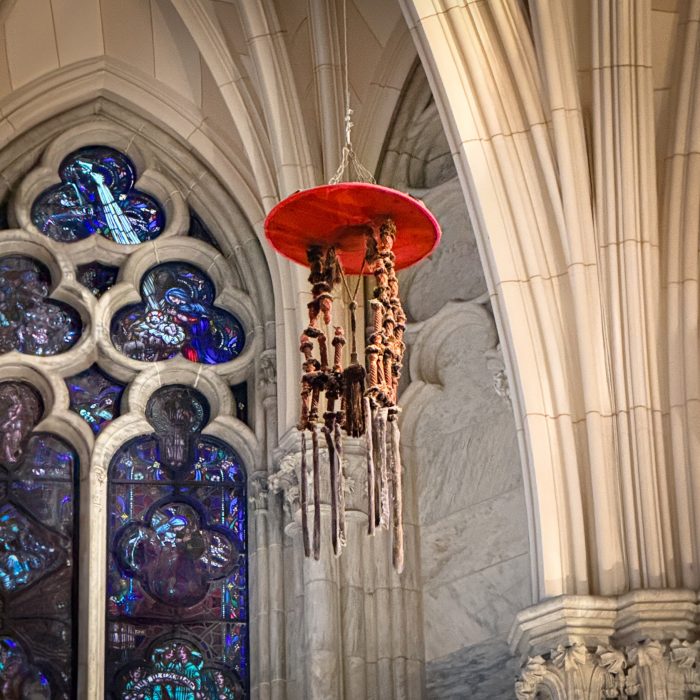
Red galeros, the broad-brimmed hats once bestowed upon cardinals, hang high in the cathedral. After a cardinal’s death, his galero is traditionally suspended in the cathedral as a visual testimony of his legacy. Now the galero is represented in a bishop’s coat of arms.
Archbishop Hicks’ galero above his coat of arms will be green because he is not a cardinal. Bishops and archbishops use green, while cardinals use red (scarlet), the traditional “red hat” of the College of Cardinals.
In the Church’s understanding of authority, all leadership flows from Jesus Christ, who is recognized as the head of the Church. The pope exercises this authority as Christ’s vicar on earth, and bishops and cardinals share in it through episcopal ordination and papal mission.
Ecclesiastical heraldry reflects this ordered structure of governance. The green galero traditionally associated with bishops and archbishops signifies their pastoral authority over a local church, exercised in communion with the pope. The red galero of a cardinal points to a distinct responsibility within that same hierarchy, marked by a closer collaboration with the pope and a readiness to serve the universal Church, even to the shedding of blood. In this way, the colors are not decorative but visual theology, expressing how authority in the Church is rooted in Christ’s authority and is entrusted, in differing degrees, to those who govern in his name.
New York within the wider Church
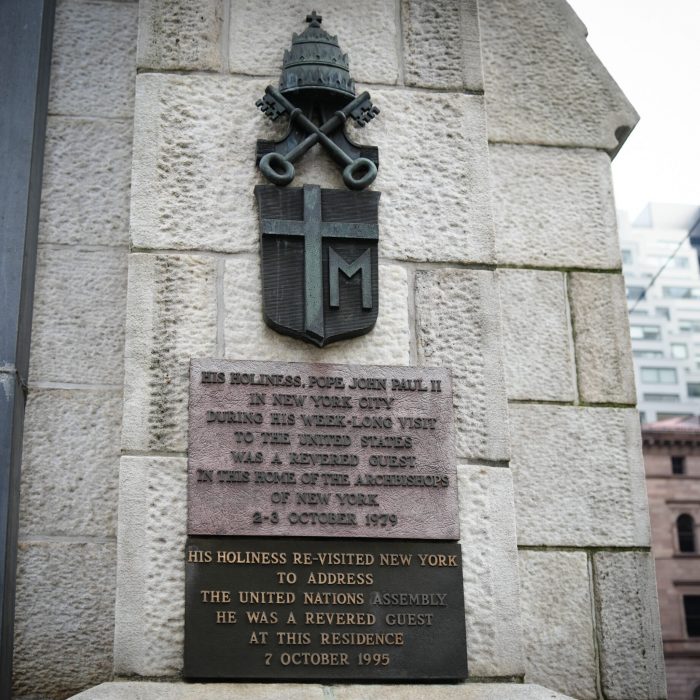
Inside and outside the cathedral are plaques that recall moments of the Archdiocese of New York’s role within the wider Church family, including visits by Popes Paul VI, John Paul II, Benedict XVI, and Pope Francis.
These markers are not the focus of the cathedral’s story, but they do underscore the role New York’s archbishops have long played as voices heard beyond the diocese itself. The local shepherd also represents the Church in New York to the rest of the world.
A house shaped by memory
Taken together, these details form a visual biography of the Archdiocese of New York, one rooted in continuity, symbolism, and the enduring role of St. Patrick’s Cathedral as the mother church of the archdiocese. It is a silent memorial of an archdiocesan family that quietly speaks to our history. As Archbishop-designate Hicks prepares to take his place in this lineage, the cathedral already frames the task before him: to teach from the chair, to serve the local church in communion with the universal one, and to carry authority with humility. Long after names are engraved in stone or stitched into fabric, the mission entrusted to the Church in New York continues, spoken quietly through marble, wood, and hanging silk.