



The Miraculous Medal: A Gift from the Virgin Mary for Our Protection and Conversion
By: Fernanda Pierorazio
A symbol of faith that has guided millions since 1832, learn about its history and message, and why it remains a symbol of Catholic identity and hope
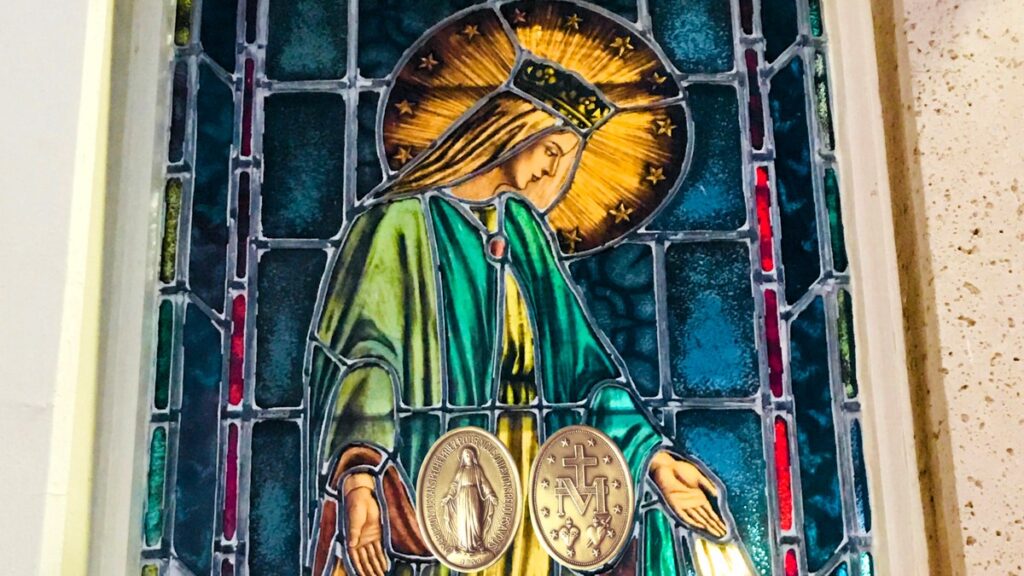
The Miraculous Medal, also known as the Medal of the Immaculate Conception, is one of the most widespread Marian symbols in the Catholic world.
Devotion to the medal began in Paris in 1830 when the Virgin Mary appeared several times to Catherine Labouré, a young novice entrusted to the care of the Congregation of the Daughters of Charity, which Saint Vincent de Paul founded.
Between July and December of that year, the Virgin appeared to Catherine three times. On November 27, Catherine had the decisive apparition, during which she saw the Virgin dressed in white, standing on a globe with her feet crushing the head of a serpent, the symbol of evil. Intense rays of light emanated from her hands.
A luminous inscription appeared around the vision that read: “O Mary, conceived without sin, pray for us who have recourse to thee.”
On the back of the image was an “M” crowned by a cross and two hearts: the Heart of Jesus, surrounded by thorns, and the Heart of Mary, pierced by a sword.
The Blessed Virgin asked Catherine to have a medal struck with this design. Afterward, she reported the vision to ecclesiastical authorities. In 1832, the first medals were minted.
Since then, millions of believers have found this medal to be a sign of protection, comfort, and deep faith. The Church still celebrates its liturgical feast day on November 27.
An Expression of Faith in the Immaculate Conception
The inscription on the medal proclaims the Immaculate Conception, the doctrine affirming that Mary was preserved from original sin from the moment of her conception. While this belief already existed, the medal helped popularize it before it was declared a dogma in 1854.
The Medal Promises Protection and Grace
The rays emanating from Mary’s hands symbolize the graces she intercedes with God for humanity. They symbolize God’s love and mercy. Wearing the medal is an act of devotion and trust in her intercession.
Call to Conversion
The hearts symbolize uniting with Christ’s sacrifice and supporting Mary’s mission with love and companionship. They also represent humility and dedication to one’s faith.
A Reminder of God’s Love
The entire medal design represents Mary guiding the faithful to Jesus and offering them her maternal protection.
The Importance of the Miraculous Medal in Latin America
Thanks to the Daughters of Charity and Vincentian missionaries, her devotion spread throughout the 19th century and was enthusiastically embraced by both urban and rural communities.
The medal is considered a symbol of protection against illness, danger, family crises, and economic hardship. Many faithful wear it around their necks, place it in their homes, or give it to loved ones during significant life events. The medal has also become a symbol of Catholic identity and hope, especially in contexts marked by poverty or social instability.
The celebration of the Miraculous Medal is much more than a liturgical date. It is a manifestation of trust and love for the Virgin Mary and a symbol that unites millions of people worldwide, including the Latin American and Hispanic communities in the United States. The medal’s message of hope, grace, and protection is as powerful today as it was in 1830, inviting believers to live with faith, humility, and open hearts to God’s love.
In countries such as Mexico, Colombia, Venezuela, Peru, and Argentina, devotions include novenas, solemn Masses, the blessing of medals, and processions. In some places, popular missions are organized where thousands of medals are distributed, spreading the Virgin’s message of trust in God and charity.