



Pope Leo Prays for Victims of Devastating Nepal Floods

| 08/27/2026

By: Vatican News

The pope assured those affected of his spiritual closeness and prayed for rescuers searching for hundreds of missing people

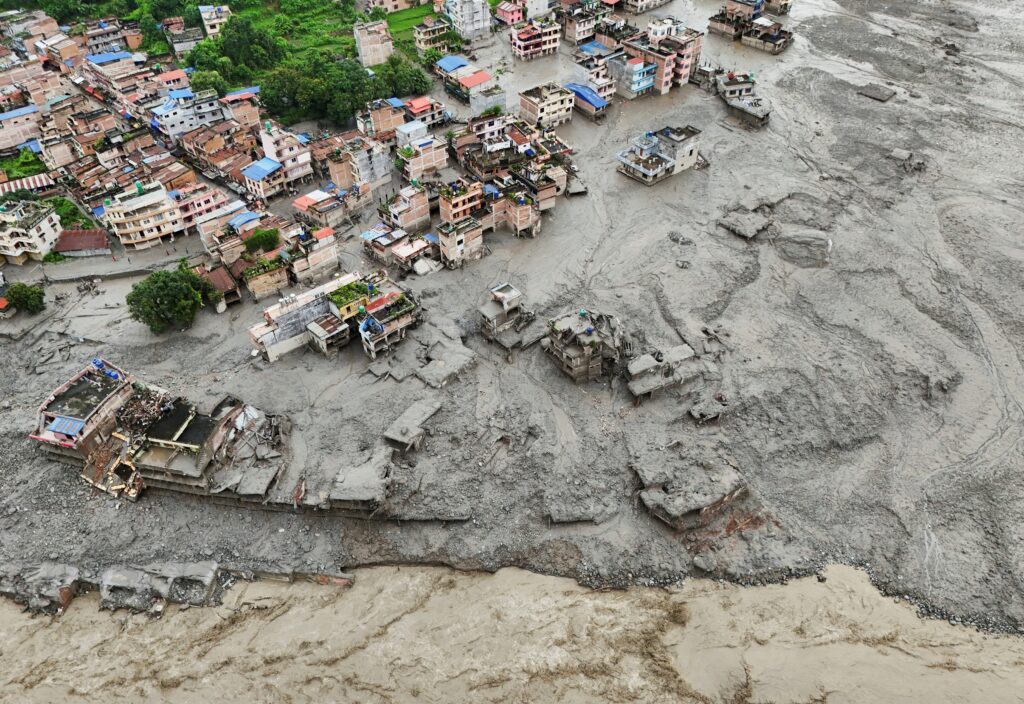
A drone view shows mud covering properties at Trishuli in Nepal's Nuwakot district on Aug. 27, 2026, following devastating floods. Massive flash floods in a border area of Nepal and China killed at least 160 people and left hundreds of tourists, workers, and others missing after suddenly sweeping through communities and halting travel in some areas on Aug. 26. Experts said a glacial collapse caused the disaster in the warming Himalayan region.
A drone view shows mud covering properties at Trishuli in Nepal's Nuwakot district on Aug. 27, 2026, following devastating floods. Massive flash floods in a border area of Nepal and China killed at least 160 people and left hundreds of tourists, workers, and others missing after suddenly sweeping through communities and halting travel in some areas on Aug. 26. Experts said a glacial collapse caused the disaster in the warming Himalayan region. (OSV News photo/Navesh Chitrakar, Reuters)

Pope Leo XIV has expressed his deep sorrow over the loss of life and widespread devastation caused by flash floods in Nepal.

In a telegram sent on Thursday and signed by Cardinal Secretary of State Pietro Parolin, the Pope commended the souls of those who died “to the clemency of the Almighty” and offered his heartfelt condolences to the bereaved.

He also assured all those affected by the disaster of his spiritual closeness and prayed for the emergency personnel engaged in the ongoing search-and-rescue operations.

The telegram concluded with the Pope’s prayers for God’s assistance and protection upon the people of Nepal.

Hundreds dead or missing

Over 350 people have died in Nepal, while more than 900 remain unaccounted for after a devastating torrent of water, mud, and debris swept through communities near the country’s northern border with China. Unfortunately, the death toll is expected to rise as bodies are recovered from under the debris.

Hundreds more are missing in neighboring Tibet, bringing the total number of people unaccounted for across the affected region to almost 1,500.

The disaster is believed to have been triggered by the collapse of part of a Himalayan glacier, which sent a sudden surge into a river system along the Nepal-China border. Scientists said the force of the collapse was so great that the resulting tremors were initially mistaken for an earthquake.

Entire settlements were inundated, while roads, bridges, power installations, and other essential infrastructure were destroyed or severely damaged. The floods also struck a major border crossing, cutting off transport and trade routes.

On this week’s episode of All Good Things with Archbishop Hicks, Archbishop Ronald Hicks and Monsignor Jim Vlaun talk about the passing of Archbishop Hicks' father, as well as the 81st Alfred E. Smith Memorial Foundation Dinner, and walking the Camino de Santiago in Spain.

By:

Archbishop Ronald Hicks

| 10/20/2026

Public sessions on Nov. 17 and 18 will stream live as bishops elect committee chairmen and a new general secretary.

By:

The Good Newsroom

| 10/20/2026

In his homily at Mass today at St. Patrick's Cathedral, Archbishop Ronald Hicks reminds us that we do not know when we will be called to Heaven. In today's Gospel, Jesus invites us to always be prepared. What does He mean by that?

By:

Archbishop Ronald Hicks

| 10/20/2026