
Serving Six Popes: Msgr. Hilary Franco’s Remarkable Career
By: Steven Schwankert
At 94, the “Bronx kid” still travels and works for peace
Editor’s note: This is the second part of a two-part interview with Msgr. Hilario “Hilary” Franco. Read the first part here.
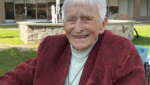
Msgr. Hilary Franco has worked with six popes and a saint and helped bring the Vatican into the computer age. But ask him how it all began, and he starts with a hot August afternoon on Broadway.
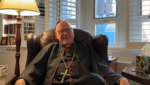
“I’m a kid from the Bronx,” Msgr. Franco said during a 90-minute interview with The Good Newsroom at Briarcliff Manor’s Parish of St. Theresa of the Infant Jesus on Sept. 30. It’s an identity he clings to firmly and fondly. Even the first chapter of his second book, “Six Popes: A Son of the Church Remembers,” is called “Bronx Kid.”
Working on Broadway as a young man, he would slip into a small church between shows, not to pray, he admits, but to escape the summer heat. There, he befriended an elderly priest and, with what the monsignor calls youthful enthusiasm, offered to drive him when he needed it. One day, the priest asked for a ride to a meeting with his superior. The destination turned out to be the residence of Cardinal Francis Spellman.
Spellman and Sheen
The cardinal came out, asked who the young man was, and said a scholarship was available to study for the priesthood in Rome. Msgr. Franco politely declined. “I did not know who the cardinal was; it didn’t mean anything to me,” he said.
Msgr. Franco had received the sacraments but never attended Catholic school. His father was a socialist, and his mother taught for 41 years.
Cardinal Spellman slipped his card into the young man’s pocket anyway. A few weeks later, after some trouble with a girlfriend, Msgr. Franco found the card and called from a public phone, reaching the cardinal himself. “When are you leaving?” Spellman asked him. “In two weeks, they are starting.”
He was ordained at 22 at the Pontifical Roman Major Seminary and went on to complete his doctorate in biblical theology. He then to the Bronx and Our Lady of Mount Carmel, where Msgr. Franco said nine priests served a parish of 62,000 people.
“My father had told me that I had to take care of the people for him,” he said. “The people were very important, so I was taking care of the people.”
Following a cold call, a short meeting, and then a lunch that included Salvador Dali and his wife, Msgr. Franco served as special assistant to then-Bishop Fulton J. Sheen, now Blessed Fulton Sheen, from 1959 to 1966, a period he chronicled in his book “Bishop Fulton J. Sheen: Mentor and Friend.”
A computer in your pocket
After his years with Sheen, Msgr. Franco served at the Vatican’s Apostolic Delegation in Washington before being called to Rome. There, working closely with Cardinal John Joseph Wright, the former bishop of Pittsburgh, he took on an unlikely mission: computerizing the Vatican.
The idea had been planted years earlier, when Thomas Watson Jr., then the chief executive officer and chairman of IBM, invited him to see an enormous computer at the company’s Manhattan headquarters, staffed by technicians dressed in white. “Father, whatever you see here, and more, is going to be in your pocket one day,” Msgr. Franco said that Watson told him.
Around 1970, Msgr. Franco said he made his case for computerization to a board of five cardinals. One of them, Cardinal Paolo Marella, was skeptical. “Young man, how did we do up until now?” the cardinal asked.
It took time, but the project went ahead. “Nowadays the Vatican is much more computerized than the Italian state,” Msgr. Franco said.
Six popes
Over the decades, Msgr. Franco served six popes, from John XXIII to Francis, a career he recounted in his book.
His candor gained him a reputation in Rome. “[Pope] Paul VI used to tell people, ‘If you want a frank opinion, ask Msgr. Franco. He will give it to you,’” he said.
He worked with Pope Paul VI on many projects, including the Pope’s Oct. 4, 1965, visit to the United Nations, the first papal visit to the United States, made during the final months of the Second Vatican Council.
His friendship with St. John Paul II began long before the 1978 conclave, when the future pope came to visit as an unknown 38-year-old auxiliary bishop from Poland. Seminaries there had been destroyed, and Blessed Sheen and Msgr. Franco helped provide support for the many young men studying for the priesthood, he said.
“I’m glad the radio in my Alfa Romeo Giulia Super was on as I was speeding from the Vatican to Villa Stritch on October 16, 1978. I hadn’t gone far before the announcer reported that fumata bianca, white smoke, was billowing from a stove inside the Sistine Chapel, signaling the election of a new pope,” Msgr. Franco wrote in “Six Popes.”
“How could anyone imagine then a Polish pope, after 500 years of Italian popes?” he said.
A friend named Mother Teresa
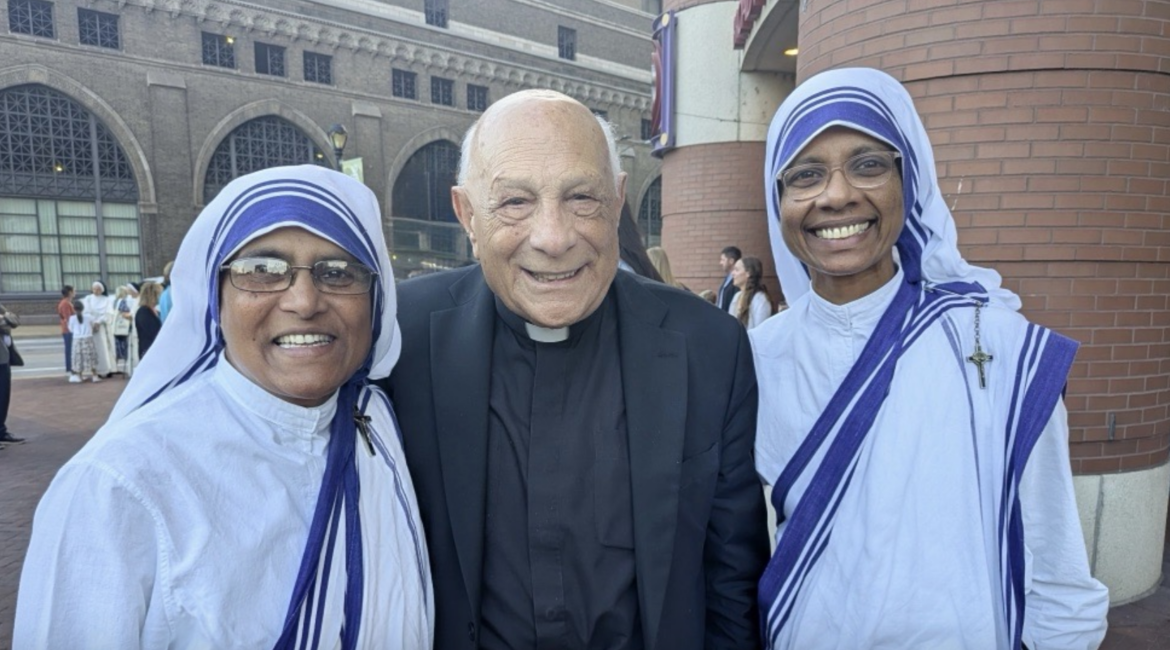
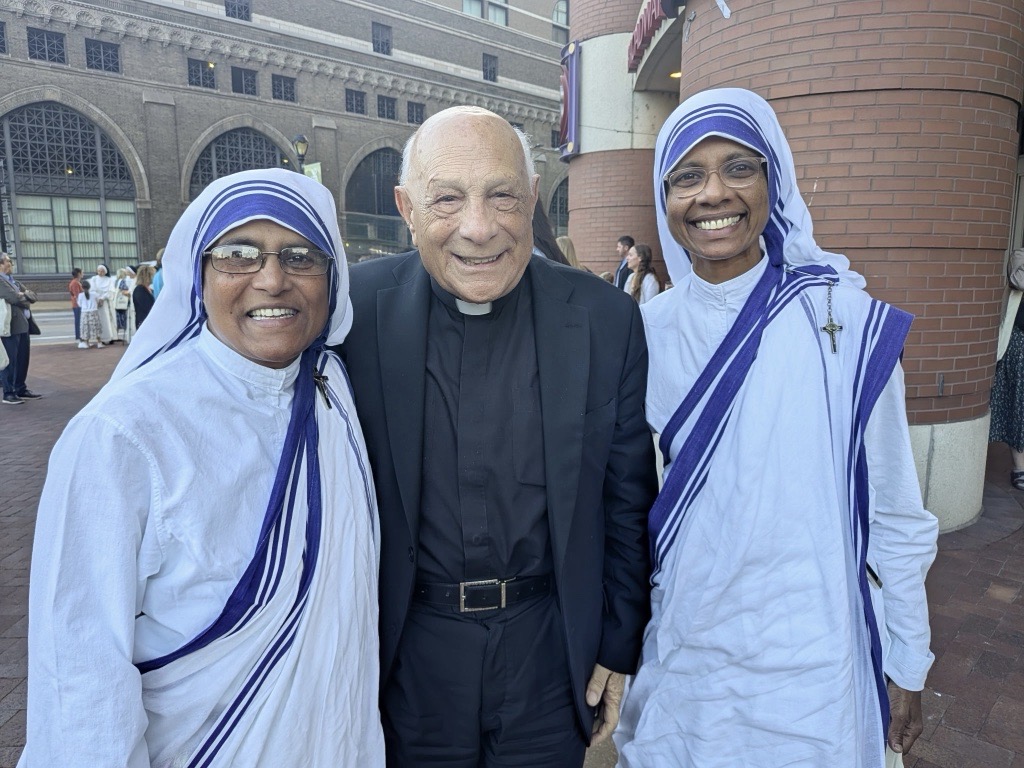
“I had, among others, a friend by the name of Mother Teresa,” Msgr. Franco said with a smile.
The two worked together for years. He helped her open a first Missionaries of Charity house in Moscow, a project that tested both of them. She also invited him to preach a 10-day retreat in Calcutta. “Let me tell you: 125 degrees, and no number for the humidity,” he said.
Their last visit came in New York on June 24, 1997. By then, now-St. Teresa of Calcutta told Msgr. Franco, there were 15 homes between Moscow and St. Petersburg, and she wanted him to come with her to China. He told her to go home and rest. She died Sept. 5.
“So it’s not a question of age,” he said. “It’s a question of doing God’s will and trying your best, no matter what.”
He has lived that lesson himself. Eighteen years ago, doctors diagnosed him with pancreatic cancer and gave him three months to live. “I guess God had other plans,” he said. “I have never been so busy ever since.”
Msgr. Franco’s work continues as an adviser to the Permanent Observer Mission of the Holy See to the United Nations.
“We have to try, for our children, for our grandchildren, to find sparks of peace, even when it’s risky,” he said. “I will do whatever I can until the Lord calls me.”