



Pope: Sacred Music Is to Glorify God and Sanctify the Faithful
By: Vatican News
During his Wednesday General Audience, Pope Leo XIV explored sacred music in the liturgy, praising it for giving voice to prayer and expressing the faith
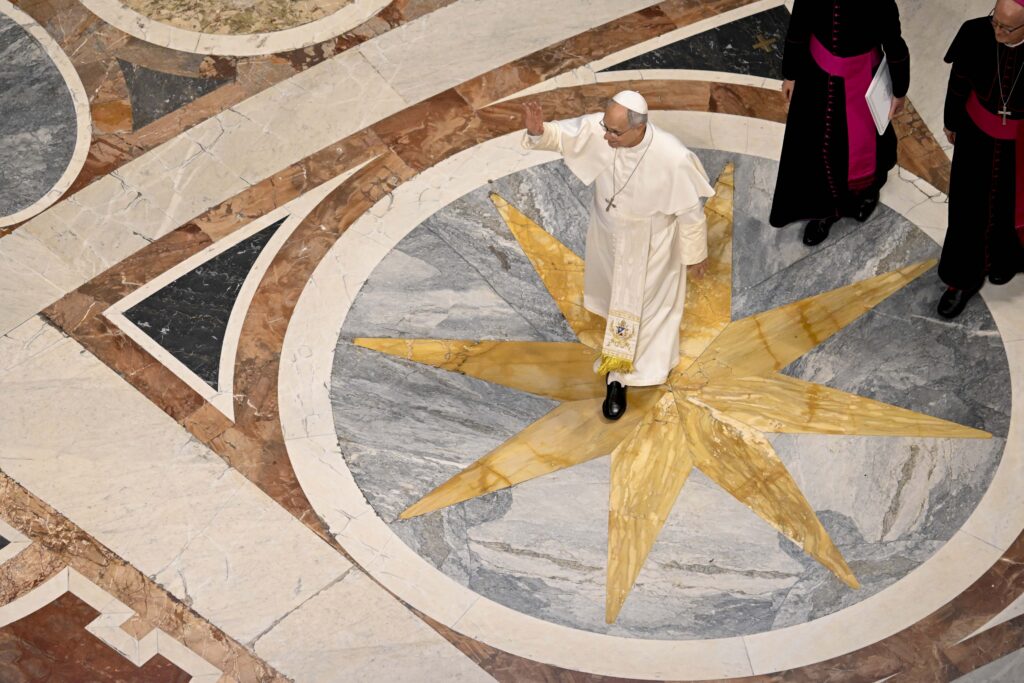
Pope Leo XIV continued his series of reflections on the Second Vatican Council’s Constitution on the Sacred Liturgy, Sacrosanctum Concilium. This week, he focused on the text’s sixth chapter, dedicated to sacred music.
During the catechesis, Pope Leo observed that the Constitution states that “the musical tradition of the universal Church is a treasure of inestimable value, greater even than that of any other art.”
Sacred music, he said, is “part of the liturgical action and is not merely a decorative part of the celebration.”
Expression of prayer and of faith
The Pope observed that singing and playing sacred music in the liturgy “means to pray, attuning one’s heart to that of our sisters and brothers and to God, through active participation in the mystery that is being celebrated.”
Recalling that music expresses the affective dimension of prayer, Pope Leo cited when St. Augustine said, “Cantare amantis est,” translated as “singing belongs to those who love.”
The Pope greets crowds gathered in St. Peter’s Basilica (@Vatican Media)
“This,” the Pope said, “is very important because it helps us to open our hearts to God’s action in grace and to allow ourselves to be molded by it.”
Moreover, the Holy Father recalled that singing fosters communion. “It contributes to the unity of hearts,” he said, “overcoming differences between people and bringing everyone together in praise of God through the symphony of voices. Thus, it becomes an epiphany of the Church, a tangible manifestation of the communion that belongs to her very nature.”
High quality and drawing principally from Scripture
Pope Leo explained that, given the profound theological significance of sacred song as an integral part of the liturgical action, certain requirements must be met.
“First,” he said, “it must respond at every level to what is most appropriate for the liturgical moment, beyond fashions or the particular sensitivities of composers.”
The Pope said that its form, especially in its melodic dimension, “must at the same time be noble and simple, of high musical quality and easily performable, particularly when it is intended to be sung by the whole assembly.”
For the same reason, he reiterated that sacred song “should be suitable, profound and at the same time readily understandable, inspired mainly by Sacred Scripture, the liturgical books and the spiritual Tradition of the Church.”
Accordingly, the Pope said this requires careful discernment and emphasized how the Constitution addresses the active participation of the faithful.
Gregorian chant held in high esteem
Pope Leo noted that the Council also attributes great importance to Gregorian chant, while not excluding other forms of sacred music from the celebration.
“A theme close to the Council’s reform is that of inculturation, including in the field of sacred music,” he said. “In particular, with regard to the musical traditions of different cultures, the Council emphasizes the importance of taking them seriously into consideration, as they form part of people’s religious and social life.”
In this context, Pope Leo recalled that his predecessor, Pope Saint John Paul II, emphasized the need to “purify worship from ugliness of style, from distasteful forms of expression, from uninspired musical texts which are not worthy of the great act that is being celebrated,” so as to guarantee dignity and excellence to liturgical compositions.
At the same time, Pope Leo noted that the composer must remember that liturgical music cannot be judged solely according to artistic quality.
The Pope said that music intended for sacred rites must also correspond to the particular requirements of the liturgy, reiterating it must adhere closely to the text, correspond to the liturgical moment for which it is intended, and appropriately convey the gestures and character of the rite.
Finally, he echoed the Council’s recommendation for adequate formation and practice of sacred music in seminaries, in the novitiate houses of studies for religious of both sexes, and also in other Catholic institutions and schools, while always ensuring that musicians and singers receive solid liturgical formation.
Pope Leo XIV concluded by recalling that Fathers of the Church held liturgical song in high esteem as a symbol of ecclesial communion, as he quoted St. Ignatius of Antioch.
“Let each of you become a choir,” he said, “so that, harmonious in agreement and taking the pitch of God in unity, you may sing with one voice through Jesus Christ to the Father, so that He may hear you and, from the good works you perform, recognize that you are members of His Son.”